











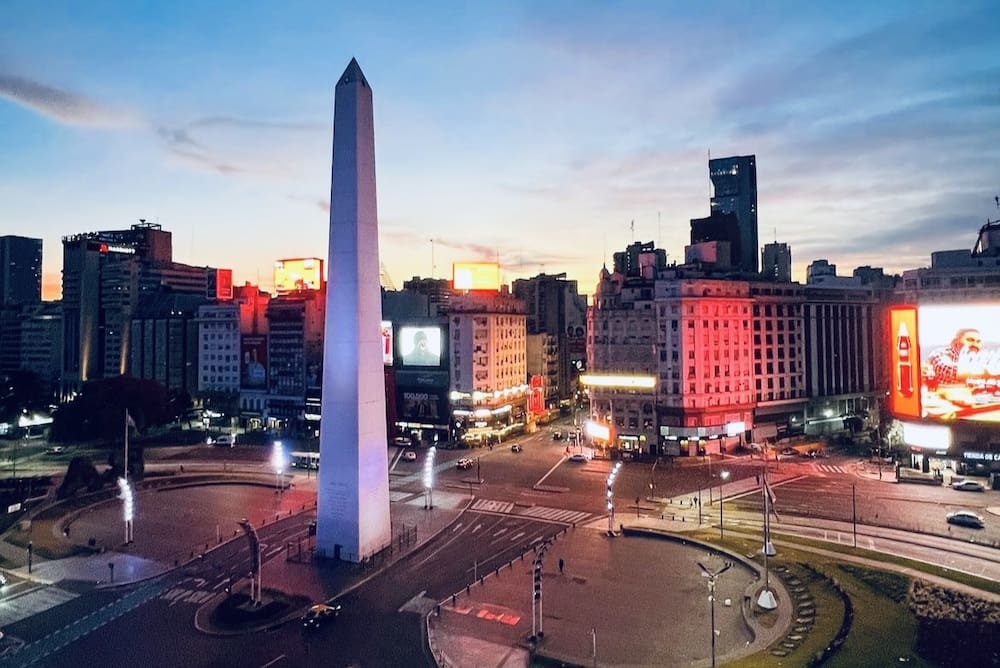
Buenos Aires is known as “The Paris of South America” thanks to its gorgeous architecture and European feel. No other city in South America had as much European influence on it as Buenos Aires did in the 1800s and early 1900s. Waves of immigrants moved from France, Spain, Italy, and Germany to Argentina, and the people that called Buenos Aires home, made a tremendous impact on the city.
Those impacts can be seen walking through Buenos Aires’ neighborhoods today.
Palermo is leafy, lively and packed with cafés, restaurants, boutiques and bars. Recoleta feels more elegant, with grand buildings, leafy streets and the famous Recoleta Cemetery. Then there’s San Telmo, where cobbled streets, old cafés, antiques and tango give the city a more historic feel.
We also like the less obvious choices. Villa Crespo has a more local feel and plenty of cafés and restaurants, while Belgrano is quieter and residential, with parks, old mansions and Buenos Aires’ Chinatown.
So, where should you actually stay? That depends on what you want from Buenos Aires. Some areas are better for nightlife and eating out. Others are calmer and more residential. And a few put you right among the city’s biggest sights. Here are the Buenos Aires neighborhoods we’d look at first.
In this travel guide:
Recoleta
Best area for: culture, luxury, shopping
First-time visitors to Buenos Aires should stay in Recoleta. The trendy area in Buenos Aires is filled with luxury shops, cafes, bars, restaurants, and hotels. The Recoleta neighborhood is Buenos Aires’ most affluent area.
Money filters into the area, but it isn’t the type of neighborhood that is dull due to its affluence. On the contrary, there is a lot to do in Recoleta.
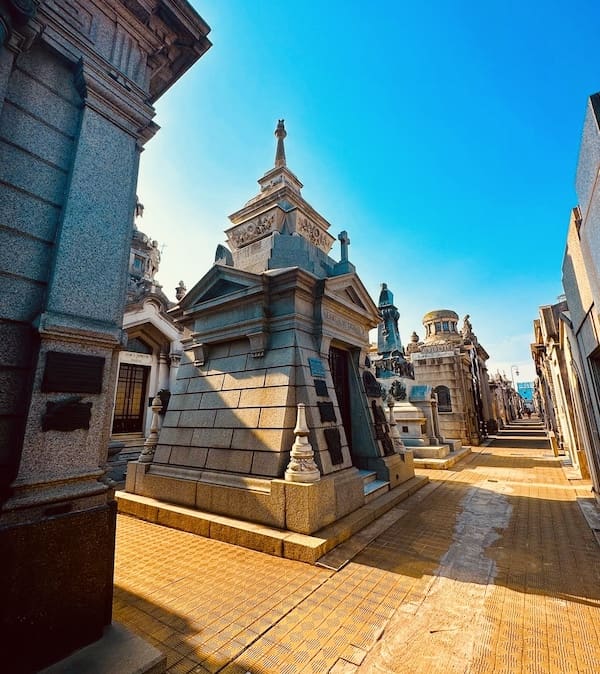
The whole area feels like a little slice of Paris dropped right into South America. Rich families fled here in the late 1800s to escape a yellow fever outbreak, building stunning French-style mansions that still line the avenues.
You cannot miss the Recoleta Cemetery. It sounds dark, but walking past those massive, ornate marble tombs feels more like exploring an outdoor museum. It is where Eva Perón is buried. Right outside, the plazas fill up with artisans and outdoor markets every weekend.
The architecture is gorgeous, with grand townhouses and high-end boutiques everywhere you look. It has a super polished, safe vibe compared to other parts of the city.
When we want a proper steak lunch in the neighborhood, we head straight to Parrilla Peña. It is an old-school, no-frills steakhouse where the waiters wear crisp vests, the empanadas arrive hot on the house, and the bife de lomo is cooked to absolute perfection. It gives you incredible local flavor without any of the touristy fluff.
Best place to stay in Recoleta
Hotel Palacio Duhau Park Hyatt. Address: Buenos Aires Ciudad Autonoma de Buenos Aires AR, Av. Alvear 1661, C1014 AAD, Argentina.
Cheaper alternative:
Hotel Hub Porteño by DON. Address: Rodríguez Peña 1967, C1021ABO CABA, Argentina
Palermo
Best area for: nightlife, shopping, food
Buenos Aires’ best nightlife can be found in Palermo which lies just north of Recoleta.
Palermo is huge. It is actually the largest neighborhood in Buenos Aires, and it feels more like several neighborhoods stitched together than one big area. We noticed that pretty quickly. One minute we were surrounded by leafy streets and elegant buildings, the next we were in the middle of busy cafés, boutiques and bars.
The green side of Palermo is one of its best features. Parque Tres de Febrero is enormous, with lakes, gardens and plenty of space to escape the traffic. The Japanese Garden and Botanical Garden are nearby too. We also liked the Palermo Rose Garden, especially when we needed a quieter break.
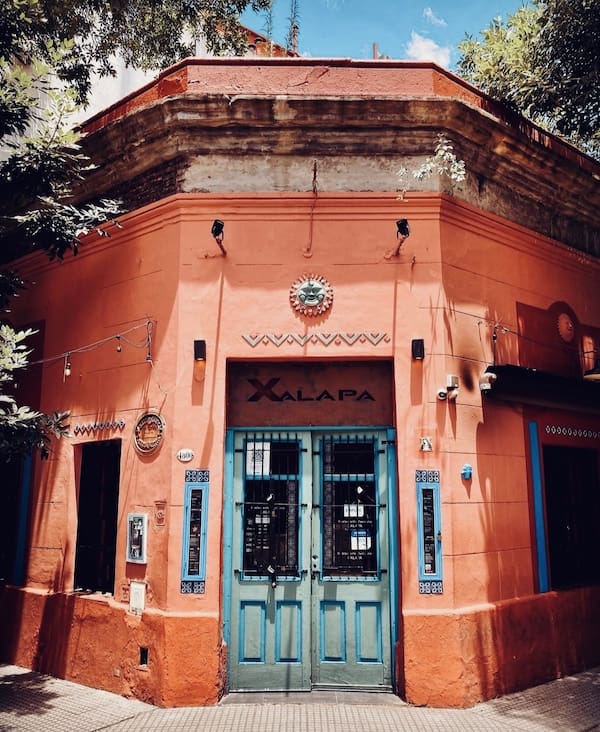
Then there is Palermo Soho. This is the part most visitors probably picture when they think of Palermo. Low historic houses have been turned into design shops, restaurants and cafés. Plaza Cortázar, still often called Plaza Serrano, is the center of the action. Palermo Hollywood feels a little different. It became a hub for television and film production, and its old residential streets are now packed with restaurants and nightlife.
Despite its popularity with tourists, Palermo is still very much a residential neighborhood. People live here, work here and head out for coffee just like anywhere else in the city.
For coffee, we would happily stop at Vive Café Cafe de especialidad , cafés de campeonatos on Costa Rica. For dinner, La Cabrera is a classic Palermo choice if you want to try a proper Argentine steak.
Best place to stay in Palermo
Glu Boutique Hotel Palermo Soho. Address: Godoy Cruz 1733, C1414CYK CABA, Argentina.
San Telmo
Best area for: culture, history, hipster
San Telmo is the oldest neighborhood in Buenos Aires.
Back in the 1700s, dockworkers and brickmakers built this area up. Wealthy families moved in later, but a yellow fever outbreak in 1871 forced them out. Working-class European immigrants then turned those abandoned mansions into vibrant communal housing tenements.
San Telmo hits the perfect balance between a real residential neighborhood and a buzzing tourist spot. Families still hang laundry over Spanish-style courtyards, but travelers fill the historic cobblestone streets every weekend.
Plaza Dorrego forms the beating heart of the area. You will see street dancers spinning through tango routines right on the pavement while people sip cold beers nearby. On Sundays, the massive Feria de San Telmo flea market stretches down Defensa Street, packed with vintage trinkets, antiques, and buskers.
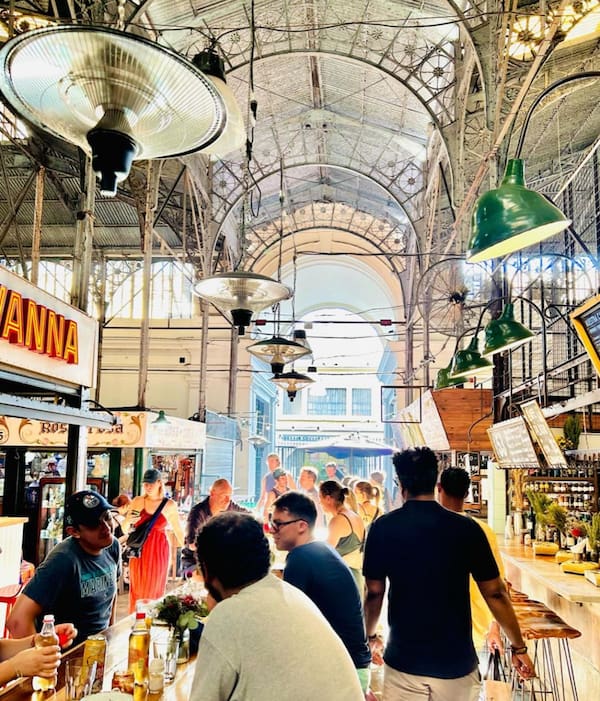
When we want a fantastic lunch, we duck into the indoor Mercado de San Telmo. We head straight for La Poesía, a classic historic café. We grab a table near the wood panels, order a rich espresso with warm medialunas, and watch the city drift by outside.
Best place to stay in San Telmo
La Querencia Bed & Breakfast. Address: Carlos Calvo 1328, C1102ABB CABA, Argentina.
Belgrano
Best area for: families, shopping, life like a local
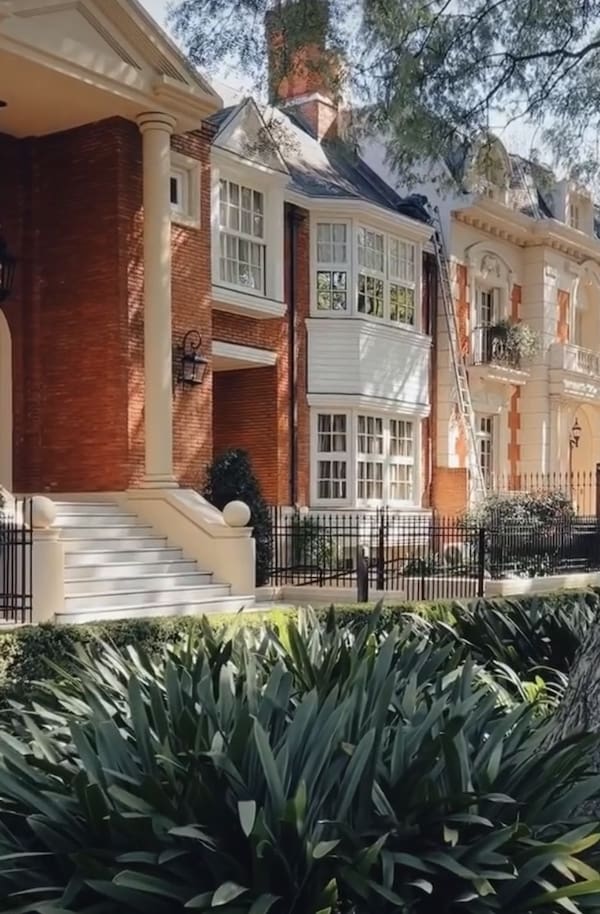
Belgrano feels different from the more touristy parts of Buenos Aires. It is a proper neighborhood first, and a sightseeing spot second. We noticed that pretty quickly. People are out walking their dogs, grabbing coffee, shopping along Avenida Cabildo and heading home from work. There are plenty of apartment buildings, but also some beautiful old mansions and leafy streets.
The neighborhood has an interesting past. Belgrano started life as a separate town in 1855. It even briefly became the seat of Argentina’s national government in 1880, before eventually becoming part of Buenos Aires.
Our favorite area to explore is around Barrancas de Belgrano. These sloping green parks were once right beside the Río de la Plata. They are a great place to sit under the trees or catch some tango on a Sunday. There is even a replica of the Statue of Liberty tucked among the greenery.
Then there is Barrio Chino. Enter through the big Chinese arch on Arribeños and suddenly the neighborhood feels completely different. Asian supermarkets, restaurants, bakeries and little shops fill the streets. The community grew from Asian immigration in the 1980s.
For coffee, we would happily stop at MUCHO cafe on Conesa. It is a good excuse to slow down for a bit. Belgrano is not where we would stay for the classic Buenos Aires postcard experience. But for a few days of local life, good food and plenty of greenery, it is a very easy choice.
Best place to stay in Belgrano
Argenta Suites Belgrano. Address: Ciudad de la Paz 1868, Belgrano, C1428CPD Buenos Aires, Argentina.
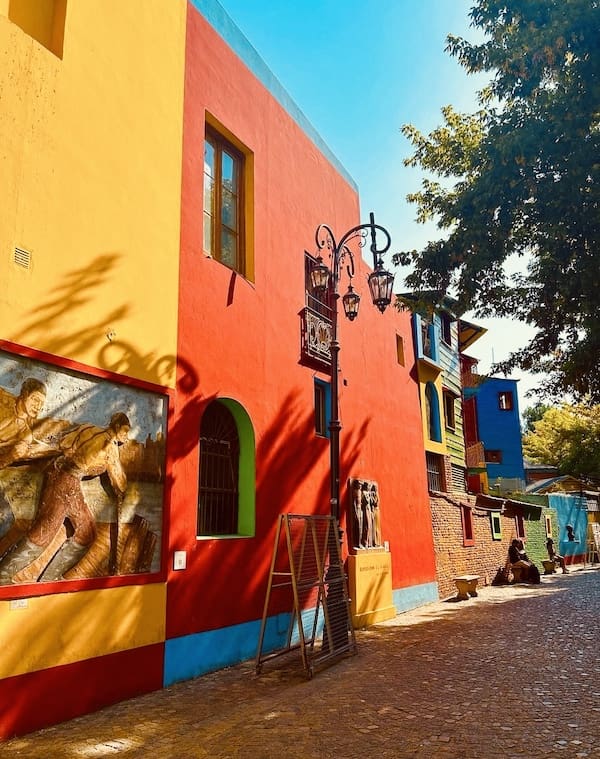
La Boca
Best area for: history, life like a local
We spent a fantastic day soaking in the energy of La Boca, a historic port neighborhood right at the edge of the city.
Working-class European immigrants settled here in the late 19th century, mostly from Genoa. They constructed homes out of corrugated iron and wood. People patched their houses together using leftover boat paint from the nearby docks. That practical history created the dazzling palette of bright red, yellow, and blue walls you see today.
The main draw is Caminito, a lively pedestrian street that operates as an open-air art museum. Street performers dance the tango right on the cobblestones while artists sell colorful canvases. Nearby sits La Bombonera, the iconic home stadium of the Boca Juniors football club.
It is definitely a heavy tourist hub near Caminito. Locals live in the surrounding blocks, but visitors stick to the main paved strip for safety reasons.
When hunger hits, we grab an outdoor table at El Gran Paraíso. Tucked inside a historic tenement courtyard, they grill up incredible traditional steaks and sausages. Eating an authentic parrillada surrounded by leafy vines makes for an unforgettable lunch break.
Best place to stay in La Boca
Maravilloso Estudio en La Boca. Address: Juan de Dios Filiberto 1066, Departamento 410, Barrio De La Boca, La Boca, 1862 Buenos Aires, Argentina.
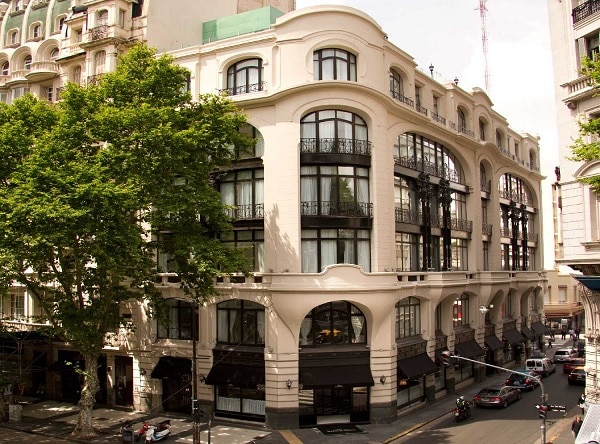
Where critics stay in Buenos Aires
Want to know where travel critics from publishers like The New York Times, Frommer’s, Fodor’s and Lonely Planet stay in Buenos Aires? Check out our overview of all recommended hotels, hostels and B&Bs in Buenos Aires.
Budget
“Vain Boutique Hotel has a central location and 15 smallish but neat rooms. Guests can take their coffee (free in the afternoons) to the terrace for some fresh air.” — New York Times.
Address: Thames, 2226, Palermo, C1425FIF Buenos Aires, Argentina.
Mid-range
“Often called “the hotel for the gourmand”—the restaurant’s chef Hernan Gipponi is a driving force behind the Buenos Aires foodie scene—the Fierro is a choice lodging for travelers looking for a five-star stay in a boutique package.” — Fodor’s.
Address: Soler 5862, Buenos Aires, Argentina.
Luxury
“Conceived for the traveling rock star, the ultra-hip Faena is a recycled 1902 port building located in the exclusive Madero Este docklands zone. Its Philippe Starck design conserves the cavernous, red brick shell of the iconic building.” — CNN.
Address: Martha Salotti 445, C1107 CMB, Buenos Aires, Argentina.
FAQ: Buenos Aires hotel recommendations
If you’re looking for a budget, boutique, or luxury hotel in Buenos Aires, or maybe your travel plans require a splendid hostel? Want to know which hotel serves the best breakfast? Here are all those answers and more about where to stay in Buenos Aires.
What is the best budget hotel in Buenos Aires?
If you’re looking for a cheap hotel in Buenos Aires, then try Vain Boutique Hotel. It’s an excellent budget hotel offering great value for money. It’s in a good location, it’s been recommended by travel experts and the hotel has excellent customer reviews. Make sure you check our shortlist of the best cheap hotels in Buenos Aires.
What is the best luxury hotel in Buenos Aires?
If money isn’t a problem and you’re looking for a luxury hotel in Buenos Aires, then go for Hotel Palacio Duhau Park Hyatt. The hotel offers excellent service, it’s in a top location, it has been rated very highly by previous guests and renowned travel critics have recommended it. Also check out our list of the best luxury hotels in Buenos Aires, it’s a manually curated list of the most exclusive 5-star hotels in the city.
What is the best bed & breakfast in Buenos Aires?
Looking for a cozy place to stay in Buenos Aires that serves you handmade and fresh breakfast in the morning? Go and check out Bed & Breakfast Abode. The B&B has been recommended by well-known travel experts and recent guests have given it top ratings.
What is the best boutique hotel in Buenos Aires?
Not a fan of big chain hotels? No problem. If you want to stay in a boutique hotel in Buenos Aires, then you should book Hotel Hub Porteño by DON. The hotel has been rated highly by previous guests for its boutique style. It has also been recommended by influential travel journalists. Make sure you check our shortlist of the best boutique hotels in Buenos Aires, it’s a manually curated list of the most unique and romantic hotels in the city.
What is the best hostel in Buenos Aires?
Looking for a good and affordable private room or cozy dorm in Buenos Aires? Check out Milhouse Hostel Avenue. The hostel has been highly rated by backpackers. Also check out our list of best hostels in Buenos Aires.
How much does it cost to stay in a Buenos Aires hotel for a night?
For a double room in a 3-star Buenos Aires hotel, you pay around $60 per night on average. A 4-star hotel in the capital of Argentina will cost you $90 per night and a luxury 5-star hotel will cost you around $175 per night.
Which Buenos Aires hotels offer a great breakfast?
Looking to start the day with some good breakfast? Try the Fierro Hotel or the Tango de Mayo Hotel. The breakfast at both hotels has been rated as excellent by recent guests.
Which hotel has the best rooftop bar in Buenos Aires?
The Magnolia Boutique Hotel offers one of the best rooftop terraces with some lovely views of Buenos Aires.
Best time to visit Buenos Aires
If you are a fan of warm weather and outdoor activities, then the best time to visit Buenos Aires is between December and February. During this time, the city experiences the height of the summer season, and the temperatures can reach up to 90 degrees Fahrenheit (ca. 32 °C).
This is the perfect time to explore the city’s many parks and outdoor markets, take a stroll along the waterfront, and enjoy the vibrant nightlife that Buenos Aires has to offer.
On the other hand, if you prefer cooler temperatures and cultural events, then the best time to visit Buenos Aires is between March and May or September and November.
During these months, the city experiences milder temperatures, and there are many cultural events taking place, including the Buenos Aires International Festival of Independent Film and the Buenos Aires Tango Festival.
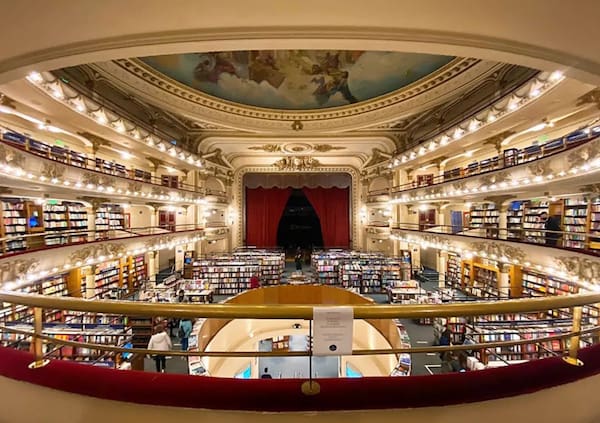
Best things to do in Buenos Aires
There are many things to do in Buenos Aires and surrounding areas, including day trips, attractions, museums, sightseeing tours and many other activities. Here’s our list of 3 things you should definitely do when you’re in and around Buenos Aires:
Highlights of Buenos Aires: Small Group 3-Hour Guided Tour
Enjoy a small-group tour of the major sites of Buenos Aires and the city’s neighborhoods. Travel by air-conditioned minivan with a professional guide to see San Telmo, the oldest residential area in the city, and La Boca, where tango is king, and more! Price: $23. More info.
Gaucho Day Tour Ranch in San Antonio de Areco
Venture into the wild Argentinian pampas and experience ‘gaucho’ (cowboy) life on a traditional ‘estancia’ (ranch) on this full-day tour from Buenos Aires, including lunch. Price: $159. More info.
Buenos Aires: Piazzolla Tango Show with Optional Dinner
Experience a classical tango show in the beautiful classical theater of Galería Güemes. Piazzolla Tango is a majestic piece of live music and tango performance inspired by Astor Piazzolla’s work. Price: $20. More info.
More things to do in Buenos Aires
Deciding where to stay in Buenos Aires
In conclusion, this travel guide has covered the best areas and hotels in Buenos Aires and how to get around. Now it is up to you to decide which area suits your needs the most.
Top 5 areas to stay in Buenos Aires
- La Boca
- San Telmo
- Recoleta
- Belgrano
- Palermo
As you have seen in this travel guide, there are a lot of things to explore, and deciding where to stay in Buenos Aires is important. Whether you stay in La Boca, San Telmo, Recoleta, Belgrano or Palermo, all those neighborhoods are in good locations.
The atmosphere of the area, whether you travel for leisure or business, whether you travel with your family or friends, and proximity to the attractions you prefer to visit should probably be the deciding factors. Whatever your preference is, you’ll have a great time in Buenos Aires.
Buenos Aires overview
| 🏨 Hotel prices: | Cheap |
| 🛏 Budget hotel: | $55 |
| 💑 Boutique hotel: | $85 |
| ⭐ 5-star hotel: | $160 |
| 🌎 Best area for first visit: | Recoleta |
| 👪 Best area for families: | Palermo |
| 💎 Best luxury hotel: | Hotel Palacio Duhau Park Hyatt |
| 👫 Best boutique hotel: | Hotel Hub Porteño by DON |
| 💰 Best cheap hotel: | Vain Boutique Hotel |
| 🎒 Best hostel: | Hostal Viajero |
More Buenos Aires tips
Take a look at our other guides about the best places to stay in Buenos Aires: